
Regenerative Agriculture: Beyond Organic?
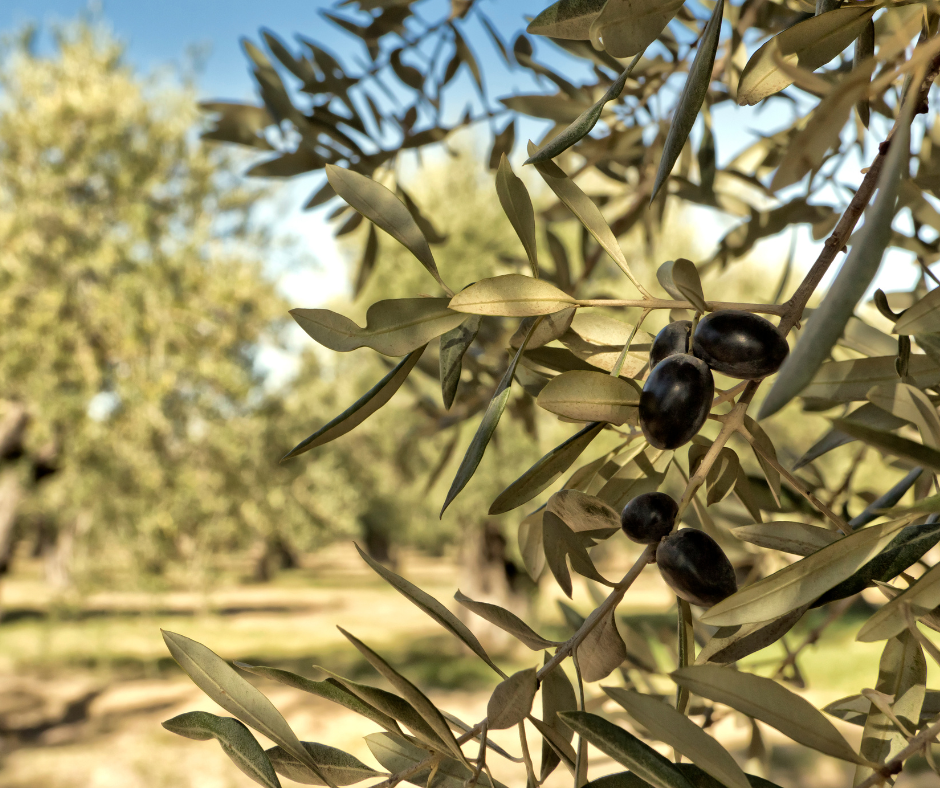
Autumn among the olive groves and vineyards marks a pause for reflection; the sounds of human activity fade away, leaving indelible memories of a season of cultivation, and the now natural rhythms invite contemplation and thought. And so it happens that, walking through the fields on cold November mornings, I ask myself what the right path to take is, what our duties are, and what our responsibilities entail. These are weighty questions to which the whirlwind of time and our actions throughout the year often does not allow us to respond.
Our company has been organic for about 15 years or more… perhaps (unfortunately, my fifty-year-old memory hints at some gaps and lapses!); yet the pressing, forceful question remains whether this is the right path, whether this is the ethically correct track to cultivate our fields.
And here new scenarios open up, with broad-ranging themes that soon become extremely relevant and deeply connected to our actions: we discuss organic, agro-organic, and regenerative agriculture.
Terms that are not entirely new, whose horizon is not clearly defined, and whose boundaries often overlap or, in any case, remain elusive, confusing many.
Today, organic is something precise, codified, and regulated down to the smallest detail; regenerative agriculture, on the other hand, is a broad concept—a powerful tool with considerable freedom for those who apply its principles.
But does regulation equate to improvement? Or does regulating mean limiting—limiting visions, horizons, imagination, the power to live and share? Undoubtedly, it is human nature to categorize and set often inviolable boundaries, in an attempt to create order while simultaneously reducing what sets us apart: our imagination, our thinking, our ability to envision and develop. As paraphrased in Il 5 Maggio: “To posterity, the arduous judgment!”
But what does regenerative agriculture actually mean? What is its most intrinsic value beyond the media propaganda that numerous multinational companies use to appear “green”?
The starting point, the beginning, is a simple concept—ancient, almost banal, yet extremely difficult to implement: the preservation and protection of cultivated soil and the increase of its carbon richness.
Every action we take in cultivation depletes the soil, reduces its fertility, and shifts the balance of the ecosystem in which we live and share our agricultural crops. Clearly, our task is to obtain the best from our production without harming the soil—and indeed, to enrich it. This goes beyond the concept of individual defense and prosperity, advancing toward interaction with all other plants, animals, insects, soil, and climate. In essence, regenerative agriculture belongs to every farmer who applies it within their own world, drawing the best for their ecosystem and rural community, guided by a strong ethical sense of community.
The exemplary model is the Brazilian rainforest, where the ecosystem emerges and survives through the verticality of the plants and an incredible variety of flora and fauna species that reproduce entirely naturally and function as a single organism, with balance reigning supreme. The opposite are desertified areas, where there is no plant cover or soil life—areas almost always created by human shortsightedness and a distorted notion of the “superman,” certainly not corresponding to Nietzsche’s idea.
Because soil is nothing less than a living organism (let us not think of it simply as “matter”), with all the issues inherent to it, interacting with the climate and, today, with human activity—clearly the dominant species on the planet—capable of tangibly altering the balance to its advantage and, often, to the detriment of everything else.
It is difficult to find definitive indicators of regenerative agriculture, but there are fundamental principles on which to base our actions:
– Soil health through its protection, by enriching it with organic matter, reducing erosion, and safeguarding invisible life—that is, microbial life;
– Biodiversity, by increasing the variety of plants and animals, enhancing ecosystem resilience, and promoting the positive coexistence of species in the environment;
– Minimal disturbance: that is, intelligent, non-invasive but inclusive farming practices to preserve microbial flora and soil fertility;
– Integration of livestock and wild animals, plants, and the rural community, with a general focus on the health of the people involved and the creation of harmonious, stable relationships;
– Carbon sequestration, using photosynthesis to fix carbon in the soil, thereby protecting plant life and creating optimal conditions for it to perform its role;
– Eliminating or reducing chemicals, fertilizers, and pesticides in the soil, guided by an ethical principle of responsible and appropriate use for production and respect;
– Water management.
I have mentioned water last precisely because, in reality, it ranks among the most important elements in regenerative agriculture. Today, we talk about Keyline, which ranges from keyline design to keyline cultivation patterns and keyline ripping. In the 1970s, P.A. Yeomans already proposed design methods based on the frame—the structure of an ecosystem—even for planning “forest cities,” prioritizing climate, geography and topography, water management, access for managing water, tree vegetation, and constructions.
Dal keyline design che è, ovviamente concetto teorico, si sviluppa e origina la coltivazione in keyline applicata, dove si tracciano linee per il rispetto del suolo e della gestione dell’acqua, dalle zone più ricche alle zone più aride secondo linee di displuvio. L’effetto della ridistribuzione dell’acqua è fondamentale per la vita e il sostentamento. Questo è basilare e cardine.
But in practice, what are the improvement actions on our land in this regard? Certainly, ripping (today, keyline ripping) controls and regulates the movement of water in the soil, aerating it without disturbing its profile or vitality, along with maintaining spontaneous vegetation cover or using cover crops.
Keyline ripping is an extremely powerful tool, effectively retiring traditional plowing as we have always known it, which depletes the soil by reducing microbial flora and altering the ecosystem. The vertical action of the ripper, on the other hand, aerates the soil and regulates water, eliminating the asphyxiating conditions created by the passage of machinery during the cultivation season. Additionally, the cutting action in winter breaks part of the root capillary system, prompting plants to renew it and improving nutrient absorption throughout the year. It becomes clear that soil, understood as a living, aerobic organism, requires oxygen—and the more of it available, the greater its retention capacity. Conversely, asphyxiation caused by compaction, lack of vegetation cover, and organic matter depletes and reduces microbial life and, overall, soil fertility.
In tandem, cover crops in agricultural fields represent the best diversification of flora, complementing polyculture meadows. In this sense, a complex vegetative cover increases soil fertility by returning organic matter, reduces soil temperature thanks to its thick layer, and supports a complex microbial life with a balance of beneficial, antagonistic, and harmful species, allowing for a reduction in plant protection treatments.
And so, returning from my olive groves, like a circular journey, I ask myself questions about my actions (à la Giacomo Ortis, so to speak), I immerse myself in my ecosystem and my rural world, and I conceive the freedom to act, the responsibility of managing a territory that depends on my actions—a fragile land that provides me with a yearly yield and, in respect of the ethics of a rural community, must be preserved and, if possible, enriched.
A concept of regenerative agriculture.
Marco Penitenti